Uncategorized

Living on an Island: When Your Journey Feels Lonely

There’s a certain kind of silence that comes with parenting through something no one in your circle truly understands. It’s not the peaceful kind…it’s the kind that hums with isolation. That’s what it feels like when you’re parenting on an island.

Not a tropical vacation kind of island. Not one with hammocks and ocean breezes. This island is made up of sleepless nights, unexpected doctor visits, emotional outbursts, and endless research. It’s formed by late-night Google searches and the quiet tears you cry after your child’s been misunderstood again.

You’re surrounded by people…family, friends, co-worker, but it feels like no one really gets it.

You talk about IEP meetings and insulin corrections, sensory overloads and 504 plans, and people nod along politely, but their eyes don’t carry the weight yours do. You mention the meltdown your child had in the grocery store or the anxiety they felt before school, and the suggestions you get are well-meaning…but empty. You get a lot of “Have you tried…” or “Maybe it’s just a phase,” when what you really need is, “That sounds so hard. I see you.”

When your child has autism, ADHD, diabetes or any diagnosis that makes their world a little harder to navigate…you quickly learn that typical parenting advice doesn’t always apply. What works for others might not work for your child. And that realization can build walls where you once had connection.

You start to hesitate before speaking up in group chats or mom circles, not because you don’t want to share, but because your story feels like too much. Too heavy. Too complicated. Too far from the “normal” that others live in. And slowly, you find yourself on that island again.

But here’s the thing I’ve come to learn: just because your island feels lonely doesn’t mean you’re alone.

There are other parents…on their own islands…watching the same storms roll in. They may not be in your immediate friend group. You may not bump into them at school pickup or soccer practice. But they’re out there. And when you find them, there’s an immediate bond. A shared understanding. No need to explain what a sensory diet is or why a blood sugar of 47 is terrifying. No need to justify why your child still needs support with things others have long outgrown.

If you’re reading this and nodding through tears, I want you to know: I see you. I know the loneliness. I know what it feels like to advocate day after day, to carry the weight of worry while still trying to let your child feel free. I know the exhaustion that comes from always being on alert…always “on.”

Your island may feel small and quiet, but you are not without strength. You are doing the work of a village…sometimes all on your own…and that deserves recognition, not pity.

So if no one in your circle gets it right now, keep going. Keep speaking your truth. Keep seeking your people. Because even if your island feels deserted, there are others out there building bridges.

And one day, someone will look at you and say, “I’ve been there.” And that moment? It’ll feel like someone just swam across the ocean to meet you.
Life

What Doesn’t Kill You

I had a conversation today that made me pause and really reflect. We were talking about life you know, the kind of talk that goes deeper than surface-level small talk. I found myself opening up about how my experiences have shaped me, especially in how I relate to others.

I’ve learned something important: even when I have a negative thought or judgment about someone or a situation, I almost always catch myself later wondering, What are they going through? Life has taught me that people act in ways that don’t always make sense on the surface, but there’s almost always something deeper behind it. I think that’s where empathy comes in when you’ve been through enough, you just start seeing people differently.

And I’ve been through… a lot.

Losing my mom was one of the hardest moments of my life. She wasn’t just my mom…she was my example, my comfort, my biggest cheerleader. Watching her battle cancer and then having to say goodbye is something I’ll carry forever. But somehow, that loss helped me understand others’ grief in a way I never could have before.

Then there’s the journey of being a mom. Raising a child with Asperger’s and with ADHD has given me a front-row seat to how hard the world can be for kids who don’t fit the mold and how hard it is for parents who are just trying to navigate it all. Add to that my child’s diagnosis with Type 1 diabetes, and you’ve got a crash course in how to live with constant awareness, vigilance, and worry. It’s a full-time job before the sun even rises.

At one point, I was also caring for my mother-in-law after her hip replacement. We later found out she had cancer too, and things spiraled quickly. Watching her struggle while trying to care for my own child’s newly diagnosed condition was a breaking point for me. I had to make the hard choice to step away from teaching, a job I loved, because something had to give.

My husband had a wonderful job… until he was fired just before Christmas for not wanting to follow COVID protocols. We had just been approved to buy a house. No insurance. No steady income. And a child needing expensive medication daily just to survive.

We were supposed to be building a life..putting down roots. Instead, we were watching everything unravel.

My husband had a wonderful job… until just before Christmas, when he was let go for not signing a form disclosing his COVID-19 vaccination status. It wasn’t that he caused a stir or refused to cooperate—he simply chose not to disclose that personal medical information. But in that moment, that choice cost him his job..

It all felt like a whirlwind..like I was watching someone else’s life happen in front of me. My mother-in-law’s health continued to decline. Eventually, they found a tumor near where her hip had been. She passed away in June 2021.

That year nearly broke me.

But you know that saying..what doesn’t kill you makes you stronger? I believe it. Every loss, every diagnosis, every financial stressor, every tear and sleepless night..they’ve all changed me. And as painful as those experiences were, they’ve made me softer. Kinder. More aware. I find myself thinking of others in ways I never did before. I don’t brush off someone’s frustration or bad attitude. I wonder what’s behind it. Because I’ve been the person barely holding it together. I’ve been the one hoping someone would just understand.

So if you’re going through something hard right now, I see you. If life feels like it’s coming at you all at once, I’ve been there. And I just want to say this: You will get through it. Maybe not untouched, but definitely stronger. And maybe, just maybe, a little more empathetic too.

Uncategorized

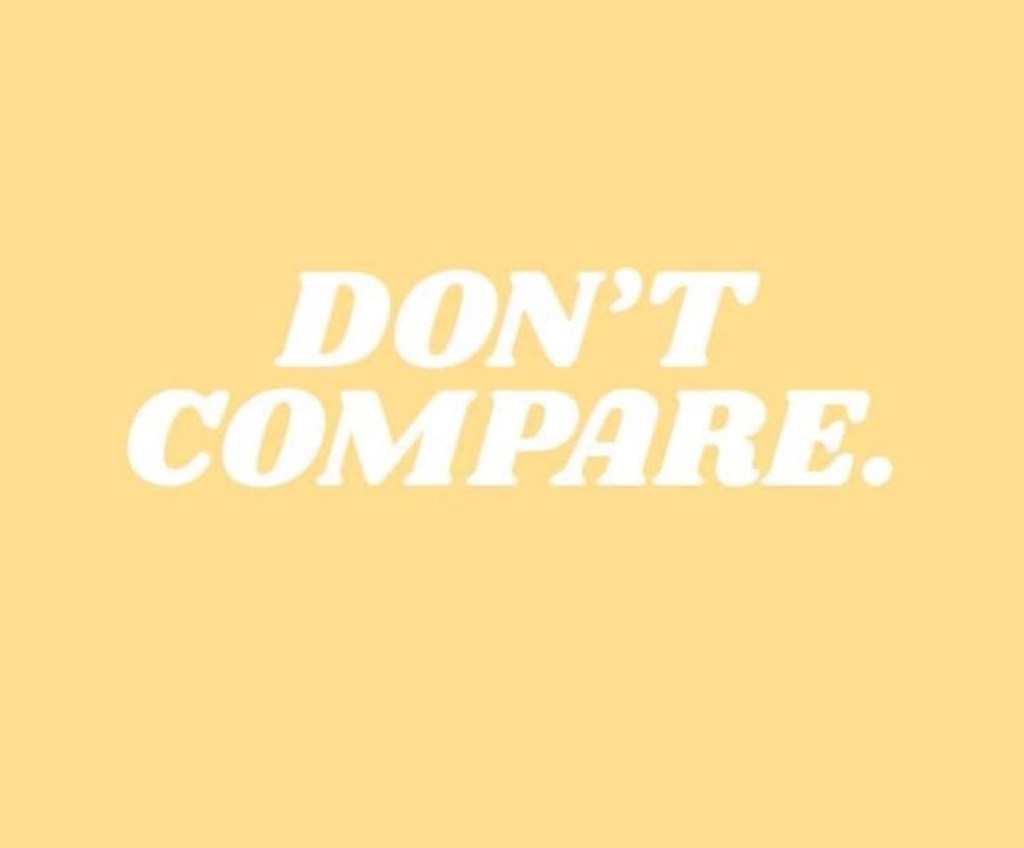
Comparison Is the Thief of All Joy

In a world filled with highlight reels, perfectly filtered photos, Pinterest-worthy classrooms, and Instagrammable moments, it’s easy to fall into the trap of comparison. But there’s an old saying that still rings true today: “Comparison is the thief of all joy.”

Whether you’re a teacher, a parent, a student, or simply someone trying your best, comparison has a way of sneaking in and robbing us of the happiness we’ve earned.

As a teacher, I’ve caught myself comparing my bulletin boards to others’, my students’ test scores to another class, or even my energy levels to those who seem to do it all. But the truth is—no one sees the behind-the-scenes. The long hours. The tears. The trying again and again.

Comparison whispers that we’re not enough. That someone else is doing it better. But joy doesn’t live in comparison. It lives in the present moment, in gratitude, in progress—not perfection.

When we stop measuring our worth against others, we can begin to celebrate what makes us unique. Your journey isn’t supposed to look like anyone else’s. Your classroom. Your parenting. Your path. They’re yours for a reason.

Let’s choose to replace comparison with community. Celebrate others’ wins without questioning your own. Cheer others on while recognizing your own growth. When we do, joy returns. And peace follows.

Remember: you are enough. Just as you are. And there’s real freedom in that.

Uncategorized

Lessons from the Valleys: Growing Through Life’s Challenges

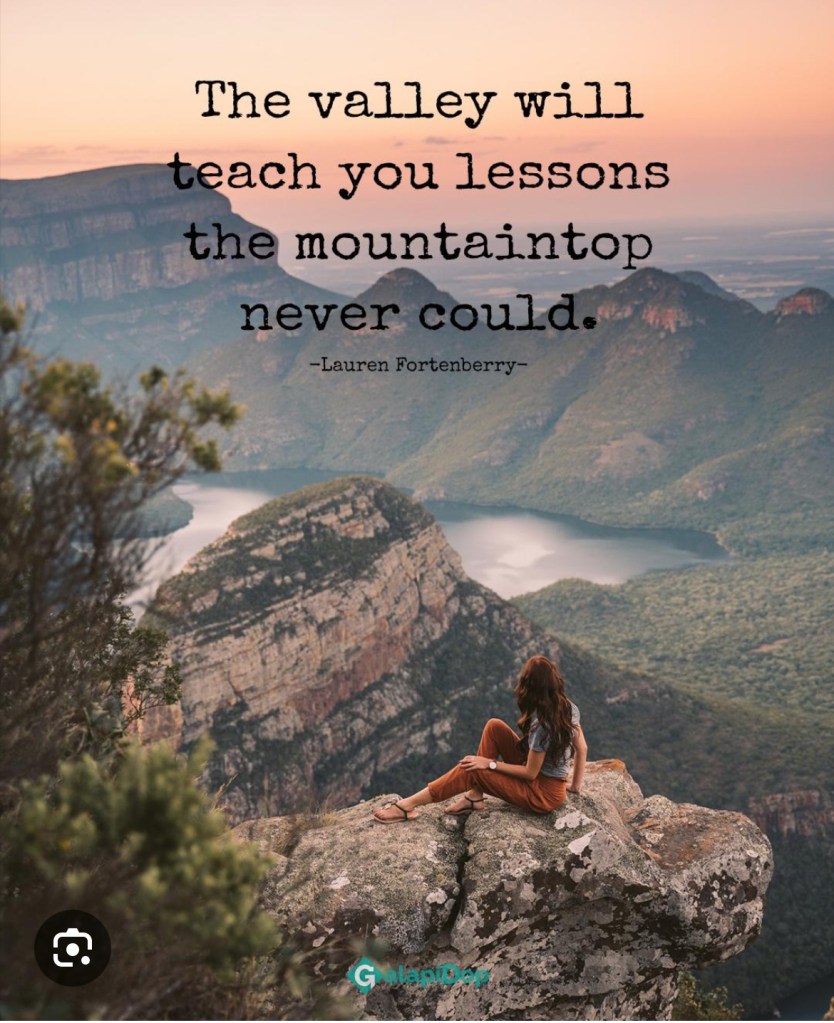
I’ve always loved the imagery of mountaintops and valleys. The mountaintops represent joy, success, and the moments when everything feels right. The valleys? Those are the struggles, the hardships, the unexpected detours. But as I reflect on my journey—both personally and professionally—I realize that I’ve learned far more in the valleys than I ever did on the mountaintops.

The Mountaintops Are Beautiful, But…

There’s no denying the beauty of the mountaintop moments. They are the times when hard work pays off, when prayers are answered, when life feels easy. In teaching, these are the moments when a struggling student finally reads that first sentence fluently, when a lesson goes exactly as planned, or when a classroom feels like a family. As a mother, they are the moments when my children overcomes challenges, when I see them happy and thriving.

But as wonderful as these moments are, they don’t always teach us the deepest lessons. They are the result of the journey, not necessarily where the most growth happens.

The Valleys Are Where Growth Happens

The valleys of life are hard. They test our patience, faith, and resilience. I’ve walked through valleys of loss, uncertainty, and heartbreak. Losing my mother was one of the hardest valleys I’ve ever faced. Watching my son struggle with Type 1 diabetes has been hard, but through the challenges, I’ve learned the true meaning of resilience, faith, and finding strength in the hardest moments.

Yet, in these valleys, I’ve learned lessons that I never would have on the mountaintop:

The Strength of Perseverance: When things don’t go as planned, when I feel like giving up, I’ve learned to keep pushing forward. Growth doesn’t come from ease; it comes from endurance.

The Power of Empathy: Walking through struggles has made me more compassionate. I understand my students better, I advocate for my son more fiercely, and I connect with others who are hurting in a deeper way.

The Importance of Faith: In the hardest moments, I’ve had to lean on my faith more than ever. It’s in the valleys that I’ve seen God’s provision, His timing, and His strength carrying me through.

The Beauty of Small Victories: When you’re in the valley, even the smallest wins feel huge. A child learning a single sight word, a good day after a string of hard ones, a moment of peace in the chaos—these things matter.

Looking Back with Gratitude

I won’t pretend that I love the valleys. No one enjoys struggle. But when I look back, I see how much they’ve shaped me. I see how the hardest moments led to the deepest wisdom, the strongest faith, and the greatest appreciation for the mountaintops when they do come.

So, if you’re in a valley right now, keep going. There’s something to learn, something to gain, and one day, you’ll look back and realize that the valley was preparing you for something greater.

And when you finally reach the next mountaintop, it will be even more beautiful because of the journey it took to get there.

Education

Debunking Myths About Special Education

Photo by Anastasia Shuraeva on Pexels.com

Special education is one of the most misunderstood areas in education. Despite progress in inclusion and awareness, many myths about special education persist. These misconceptions can lead to unnecessary stigma, misunderstandings, and missed opportunities for students with disabilities. As a special education teacher with nearly two decades of experience, I want to shed light on some of these myths and share the reality behind them.

Myth #1: Special Education is Only for Students with Severe Disabilities

The Reality:

Special education is designed to meet the needs of a wide range of learners with diverse abilities and challenges. Students with learning disabilities, ADHD, autism, speech and language delays, and emotional or behavioral challenges, among others, may qualify for special education services. Some of these students have mild or invisible disabilities and simply need tailored instruction or accommodations to succeed.

Special education is not a “one-size-fits-all” program—it’s individualized for each student’s unique needs.

Myth #2: Students in Special Education Can’t Be Successful

The Reality:

This couldn’t be further from the truth! With the right support, students in special education can excel academically, socially, and personally. Many go on to pursue higher education, enter the workforce, and live fulfilling lives.

Success looks different for every student, and special education empowers students by helping them meet their goals, build confidence, and develop lifelong skills.

Myth #3: Special Education Teachers Just “Baby” Their Students

The Reality:

Special education teachers are highly trained professionals who use evidence-based strategies to teach academic, social, and life skills. We focus on helping students develop independence, self-advocacy, and problem-solving abilities.

It’s not about “babying” students; it’s about meeting them where they are and helping them grow. For example, we might break down complex tasks into manageable steps, provide visual supports, or teach students self-regulation techniques to help them thrive.

Myth #4: Inclusion is Harmful to General Education Students

The Reality:

Inclusive classrooms benefit all students. Research shows that when students with disabilities learn alongside their typically developing peers, everyone gains. Students without disabilities develop empathy, understanding, and collaboration skills.

Inclusive settings also reflect the diversity of the real world, preparing all students for life beyond the classroom. With proper planning and support, inclusion can be a win-win for everyone involved.

Myth #5: Students in Special Education Just Need to “Try Harder”

The Reality:

Students with disabilities are not lazy or unmotivated. They face challenges that require different approaches to learning. For instance, a student with dyslexia might struggle to read because their brain processes language differently, not because they aren’t trying.

Special education provides the tools, strategies, and accommodations to help students overcome these challenges and achieve their full potential.

Myth #6: Special Education is the Same as Tutoring

The Reality:

While tutoring focuses on reteaching specific content, special education addresses a student’s individual needs through specialized instruction. It might involve teaching foundational skills, using assistive technology, or adapting the curriculum to align with a student’s learning style.

Special education is about equipping students with the skills and strategies they need to succeed both in and outside the classroom.

Myth #7: Special Education is a “Life Sentence”

The Reality:

Receiving special education services does not mean a student will be in the program forever. Many students graduate from special education when they no longer need additional support. The goal is to help students become as independent as possible and to transition them out of special education services when appropriate.

Breaking the Stigma

Understanding the truths about special education is key to breaking the stigma and fostering a more inclusive society. By addressing these myths, we can create a school environment where all students feel valued, supported, and empowered to reach their potential.

If you’re a parent, teacher, or community member, I encourage you to learn more about special education and advocate for students with disabilities. Together, we can ensure that every child has the opportunity to succeed.

Education

Why I Love Being a Special Education Teacher

Teaching is more than a profession—it’s a calling, a journey, and an incredible privilege. For the past couple years, I’ve had the honor of working in special education at the elementary level, focusing on reading resource for kindergarten through second grade. When people ask me why I chose this path, my answer is simple: I love making a difference.

When I first dreamed about my future, I never imagined I’d become a special education teacher. Like many people, I had a vision of what my life and career would look like, and this wasn’t part of the plan. In fact, I stumbled into this field almost by chance—but it was the best thing that could have happened to me.

I started teaching with one idea of what I thought I was meant to do, but as I worked with students who needed extra support, I felt an undeniable pull toward special education. It wasn’t always easy at first. There were challenges I didn’t anticipate and moments of self-doubt, but as I got to know my students and saw the difference I could make in their lives, I realized I was exactly where I was meant to be.

Sometimes, life leads us down unexpected paths. What I’ve learned is that those detours often turn out to be the most rewarding journeys of all.

The Joy of Growth

One of the greatest blessings of being a special education teacher is witnessing the growth and progress of my students. Every milestone, no matter how small it may seem to others, is a victory worth celebrating. Whether it’s a student learning their first set of sight words or finally mastering a tricky sound, each moment reminds me of why I do what I do.

Building Strong Relationships

In special education, I get to work closely with students, parents, and colleagues to create individualized learning experiences. The relationships I’ve built with my students are incredibly rewarding. I love their unique personalities, the way they light up when they achieve something, and the trust we build over time. These connections extend beyond the classroom and become lifelong memories.

Fostering Confidence

One of my main goals is to help my students believe in themselves. Many of my students start with self-doubt, thinking they can’t keep up with their peers. But watching them discover their strengths, develop resilience, and gain confidence is one of the most fulfilling parts of my job. Seeing a child beam with pride because they’ve achieved something they once thought was impossible is a gift like no other.

Creativity and Problem-Solving

Special education teaching challenges me to think outside the box. Every child learns differently, and it’s my job to find ways to meet their unique needs. This has pushed me to be more creative and innovative in my teaching, always searching for new strategies and tools to help my students succeed.

Advocacy and Awareness

Being a special education teacher also means advocating for students who may not have a voice. I take pride in working to create an inclusive environment where every child feels valued and understood. Through this work, I hope to inspire others to see the potential in every child, regardless of their challenges.

A Career That’s More Than a Job

For me, teaching isn’t just a job—it’s my passion. It’s a chance to make a lasting impact on the lives of children and their families. It’s about celebrating progress, embracing challenges, and knowing that every day I have the opportunity to change someone’s world for the better.

To anyone considering a career in special education, I encourage you to take the leap. It’s a path filled with challenges, but the rewards are immeasurable. My students have taught me patience, resilience, and the power of unconditional love. I am endlessly grateful for the privilege of being their teacher.

Uncategorized

Reflections on 9/11 Through My Eyes and My Son’s

The morning of September 11, 2001, is one etched in my memory as vividly as if it happened yesterday. The sights, sounds, and emotions remain just as sharp, even over two decades later. The phrase “Where were you when the world stopped turning that September day?” often brings me back to that morning when life as we knew it changed forever.

I was a freshman at Lamar University, attending my U.S. History class with Mr. Anderson. I remember the buzz in the classroom as we settled in, completely unaware of what was about to unfold. After class, my friend Meagan and I walked over to the Mirabeau Café, where we saw the horrifying images of planes crashing into the Twin Towers playing on the TV screens. I can still feel the cold chill that went through me as we watched in disbelief, confusion, and overwhelming sadness.

In those moments, the world changed. We all changed. It was a time when the unthinkable became reality, and everything felt fragile. The days that followed were a haze of mourning, patriotism, and questions. We grappled with understanding an event that shook not just our country but the entire world.

Recently, my son watched a video about 9/11. After school, he said, “It was traumatizing to watch that.” His words struck me, because while he was seeing history unfold on a screen, I had lived through it. I experienced the uncertainty, the fear, and the heartbreak firsthand.

I told him, “I lived through that time. I remember every detail.” I explained how life shifted for all of us in ways that are hard to grasp for those who didn’t experience it in real time. The fear of another attack, the unity that emerged from the rubble, and the way every single one of us was impacted, no matter where we lived.

It’s difficult to convey to younger generations just how monumental that day was for all of us who witnessed it. What they see in documentaries or videos is the aftermath, the history, but for those of us who lived it, it’s much more than that. It’s a defining moment that shaped our lives in countless ways.

As a teacher, I often think about how to help younger generations and my own children understand not just the facts, but the emotional weight of 9/11. It’s our job to teach history, but it’s also our responsibility to share the human stories—the personal experiences that make these events real.

That day taught me the fragility of life and the importance of resilience. It’s something I carry with me, and it’s something I hope to pass on to my son. History is more than dates and events; it’s about people, their lives, and the ways in which the world changes around them. I’ll never forget where I was when the world stopped turning that day. And as my son begins to learn about it, I hope he understands the depth of what that day means for all of us.

We remember. We reflect. We rebuild.

Uncategorized

The Teacher I Became Because of My Mother

Six years ago, I lost my mother to breast cancer. During her years working, she was a substitute teacher, but in my heart, she was so much more—she was the teacher she never officially became. Her influence on my life and career has been profound, shaping the teacher I am today.

Growing up, I watched my mother step into classrooms with a natural ease, filling in for teachers who needed a day off. She had a way of connecting with students that went beyond the typical expectations for a substitute. It was as if she could see each child’s potential, and she made it her mission to draw it out, even if only for a day. She had the patience of a seasoned educator and the compassion of someone who understood the unique challenges every child faces.

My mother never pursued a full-time teaching career, and I often wonder what might have been if she had. But in many ways, she taught me more about teaching than any degree program or professional development course ever could. She showed me that teaching isn’t just about delivering lessons—it’s about seeing each student as an individual, understanding their needs, and nurturing their growth in ways that go beyond academics.

When I decided to become a teacher, it wasn’t a decision made lightly. It was a calling, one that I believe my mother passed down to me. Every day I walk into my classroom, I carry with me the lessons she taught me—lessons of patience, kindness, and the importance of making each child feel valued. My approach to teaching, especially in special education, is rooted in the belief that every child deserves a chance to succeed, a belief that was instilled in me by my mother.

Though she’s no longer here, her influence is present in every lesson I teach, every student I encourage, and every success story that comes from my classroom. I like to think that in some way, I’m living out the teaching career she never had the chance to pursue. My mother may not have been a teacher in the traditional sense, but she was, without a doubt, the most important teacher in my life.

As I continue my journey as an educator, I strive to honor her memory by being the kind of teacher she would have been—compassionate, dedicated, and deeply committed to the success of every student who crosses my path. In doing so, I hope to pass on the legacy she left me, inspiring others to see the profound impact teachers have, whether in the classroom or through the lives they touch.

Uncategorized

Top Tech Products to Transform Your Classroom

Incorporating technology in the classroom can make learning more interactive, engaging, and efficient. Here are some innovative tech products available on Amazon that can transform your classroom and elevate your teaching methods.

Wireless Chime Doorbell Kit

Creating a well-organized and efficient classroom environment is crucial for maximizing student learning and engagement. One simple yet effective tool that can significantly improve classroom management is a wireless doorbell. This device can be used for a variety of purposes, from signaling transitions to capturing students’ attention without raising your voice. Here’s why a classroom doorbell is a must-have.

Why Use a Classroom Doorbell?

1. Smooth Transitions:
A classroom doorbell helps signal the end of one activity and the beginning of another, making transitions smoother and more efficient.

2. Attention Getter:
With a pleasant chime, you can quickly capture students’ attention without the need to raise your voice, helping maintain a calm and orderly environment.

3. Positive Reinforcement:
Use the doorbell as a cue for positive behaviors, reinforcing good habits and classroom routines.

4. Versatility:
It can be used for multiple purposes such as signaling group rotations, start/end of recess, or alerting the class to a visitor.

Stream Deck

One innovative tool that teachers are starting to use is the Elgato Stream Deck. Originally designed for gamers and streamers, this customizable control pad offers a range of features that can be incredibly useful in an educational setting. Here’s how you can use a Stream Deck to enhance your classroom.

What is a Stream Deck?

The Elgato Stream Deck is a compact device with programmable buttons that allow you to control various applications and functions with a single press. Each button can display custom icons, making it easy to remember their functions.

How to Use a Stream Deck in the Classroom

**1. Lesson Transitions: Program the Stream Deck to switch between different multimedia sources, such as slideshows, videos, and documents, with just one click. This ensures smooth and seamless transitions during lessons.

**2. Interactive Learning: Use the Stream Deck to quickly access interactive tools like online quizzes, educational games, and student response systems. This keeps students engaged and makes learning more dynamic.

**3. Classroom Management: Set up buttons for frequently used classroom management tasks, such as taking attendance, setting timers, or playing attention-getting sounds.

**4. Instant Feedback: Program buttons to provide immediate feedback to students, such as displaying correct answers or showing encouraging messages.

**5. Virtual Teaching: For online classes, the Stream Deck can control your video conferencing software, allowing you to mute/unmute, share your screen, and manage participants efficiently.

Top Features of the Elgato Stream Deck

  • Customizable Buttons: Each button can be programmed with unique functions and custom icons.
  • Ease of Use: Intuitive drag-and-drop interface for programming buttons.
  • Versatility: Compatible with various applications and platforms.
  • Compact Design: Takes up minimal desk space.

Wireless Presenter

A wireless presenter, also known as a presentation clicker, can be a game-changer in the classroom. This handy tool allows teachers to move freely while presenting, enhancing both engagement and interaction with students. Here’s why you should consider incorporating a wireless presenter into your teaching toolkit.

Why Use a Wireless Presenter in the Classroom?

1. Increased Mobility:
A wireless presenter frees you from being tethered to your computer, allowing you to move around the classroom. This mobility helps you engage with students more effectively and maintain their attention.

2. Smooth Presentations:
With the ability to control your slides remotely, transitions between different parts of your presentation become seamless, ensuring a professional and polished delivery.

3. Interactive Teaching:
Being able to walk around the room while presenting enables you to interact more closely with students, facilitating better discussions and more dynamic teaching.

4. Reduced Distractions:
Using a presenter minimizes the need to return to your computer to change slides, reducing interruptions and maintaining the flow of your lesson.

Remote Control Wireless Plugs

Lighting plays a crucial role in creating an effective learning environment. Using remote control outlet plugs for lamps can simplify your classroom management, enhance safety, and provide flexibility in controlling the lighting. Here’s how you can use remote control outlet plugs to manage your classroom lamps more efficiently.

Why Use Remote Control Outlet Plugs for Lamps in the Classroom?

1. Convenient Lighting Control:
Turn lamps on and off with a remote from anywhere in the classroom, allowing you to adjust the lighting without interrupting your lesson.

2. Enhanced Classroom Safety:
Easily switch off lamps when they are not in use, reducing the risk of electrical hazards and preventing overheating.

3. Energy Efficiency:
Remote control outlet plugs help save energy by ensuring lamps are only on when needed, reducing electricity costs.

4. Flexible Lighting Options:
Quickly adjust lighting levels to suit different activities, whether it’s reading, group work, or presentations.

By thoughtfully incorporating these tech products, teachers can transform their classrooms into modern, innovative spaces. As technology continues to evolve, staying updated with the latest tools is essential for maximizing student potential and maintaining a competitive edge in education.

Invest in these tech products and watch your classroom transform into a hub of excitement and discovery, where learning knows no bounds.


Disclosure: This post contains affiliate links. If you use these links to buy something, we may earn a commission at no additional cost to you. Thank you for supporting our blog!

Education, Products

Top Classroom Must-Haves for Teachers

Photo by Yan Krukau on Pexels.com

Creating an effective and engaging classroom environment is essential for both teachers and students. Having the right tools and supplies can make a significant difference in daily teaching and learning experiences. Here are the top 10 classroom must-haves for teachers, available on Amazon. These items will help you stay organized, keep your students engaged, and make your classroom a more efficient and enjoyable place to learn.

Mr. Sketch Scented Markers

Mr. Sketch Scented Markers make classroom activities fun and engaging. The vibrant colors and fun scents are perfect for art projects and creative assignments.

Key Benefits:

  • Bright, vivid colors
  • Scented for added fun
  • Durable and long-lasting

AmazonBasics Laminator Machine

A laminator is a must-have for preserving important documents, student artwork, and teaching materials. The AmazonBasics Laminator Machine is affordable and easy to use.

Key Benefits:

  • Heats up quickly
  • Works with various laminating pouch sizes
  • Compact and lightweight

Scotch Thermal Laminating Pouches

Pair your laminator with Scotch Thermal Laminating Pouches to keep your materials safe and durable.

Key Benefits:

  • Crystal clear finish
  • Protects documents from damage
  • Compatible with most laminating machines

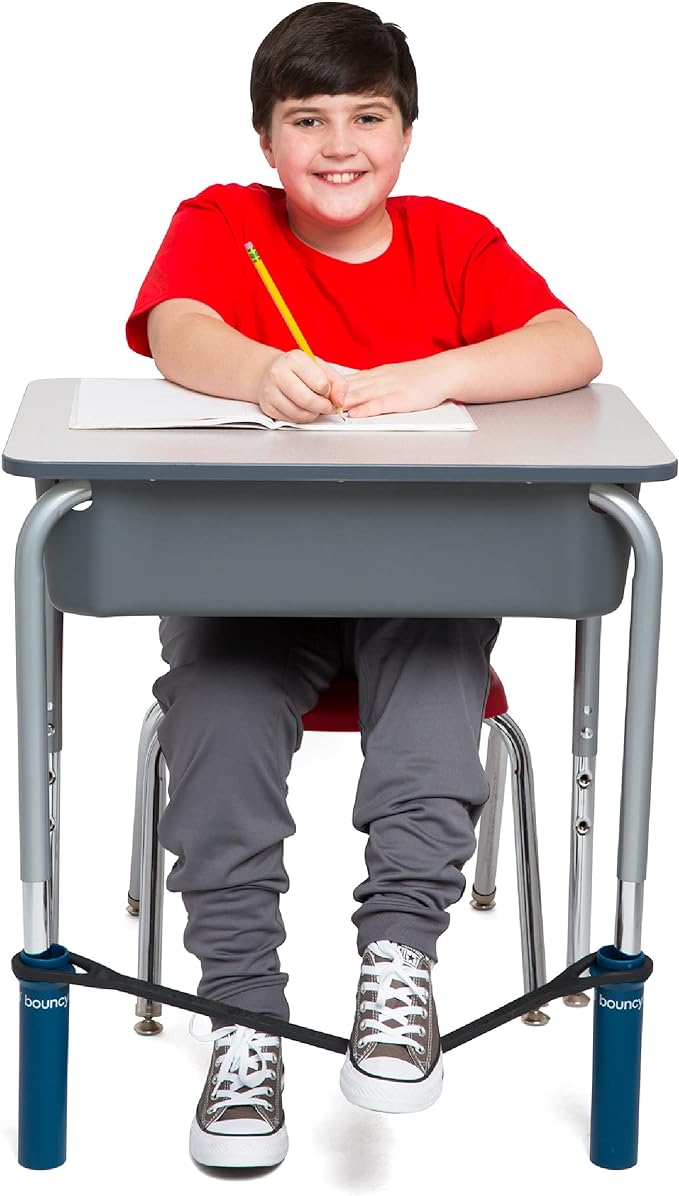
Bouncy Bands for Chairs

Bouncy Bands are an innovative solution for restless students. They attach to chair legs, allowing students to move their feet while staying seated.

Key Benefits:

  • Helps students focus
  • Easy to install
  • Durable and quiet

Time Timer Original 8-inch

A classroom timer is a useful tool for managing activities and keeping students on track during lessons and transitions.

Key Benefits:

  • Visual and auditory alerts
  • Easy to set and use
  • Portable and durable

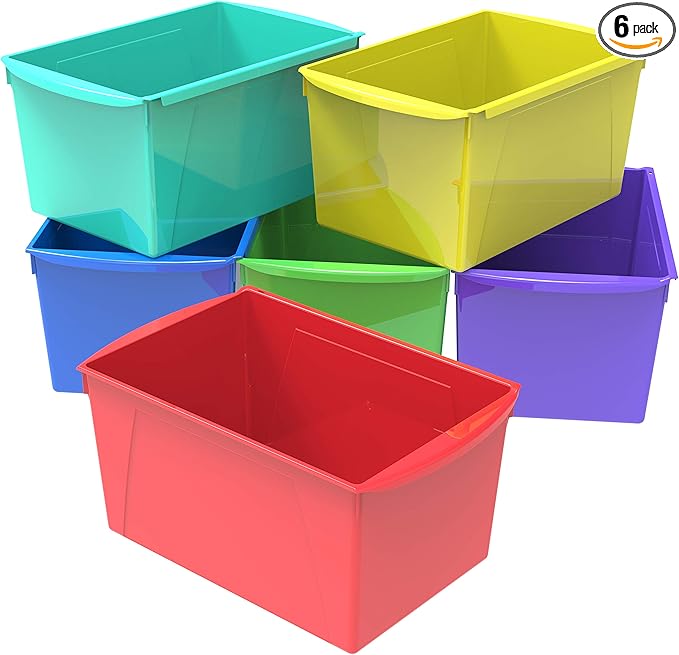
Storex Large Book Bin, Assorted Colors, 6-Pack

Keep your classroom neat and organized with these versatile storage bins. They are perfect for storing books, supplies, and student work.

Key Benefits:

  • Stackable and durable
  • Variety of colors
  • Easy to label

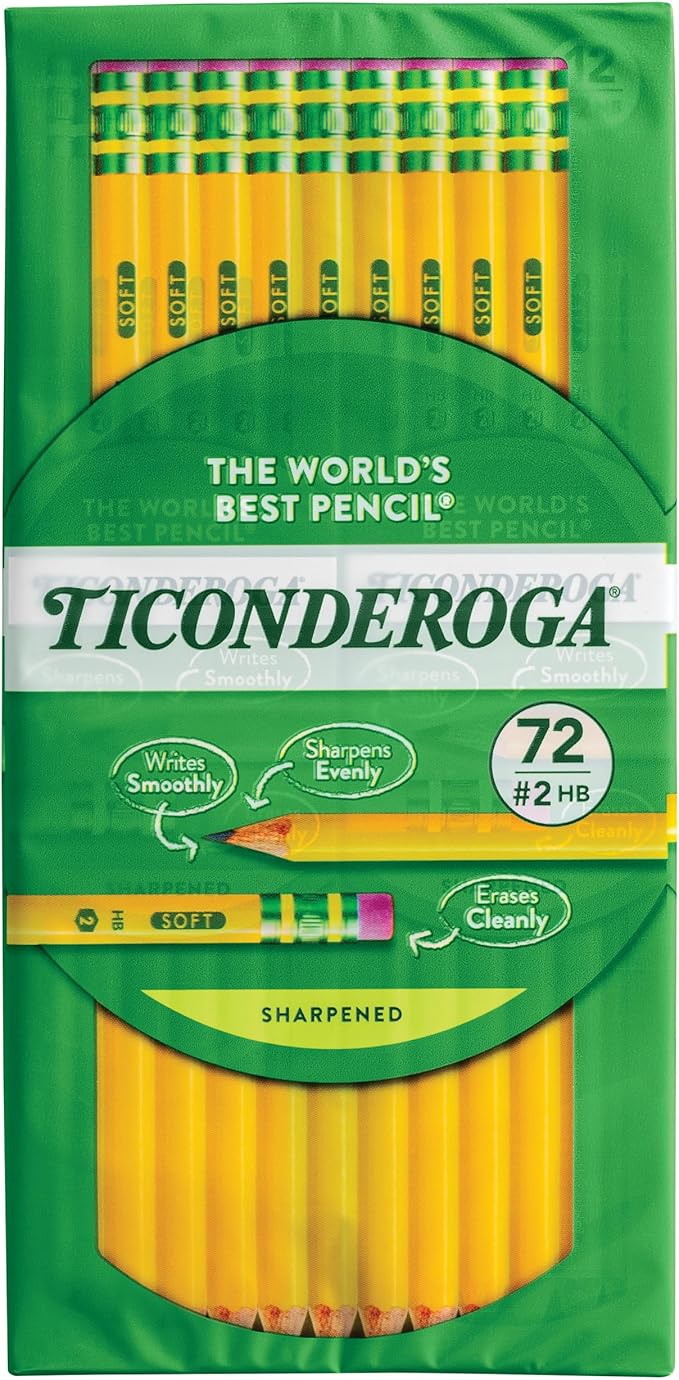
Ticonderoga Pencils

Ticonderoga Pencils are known for their quality and reliability. They are a classroom staple for writing, drawing, and standardized tests.

Key Benefits:

  • High-quality wood and graphite
  • Easy to sharpen
  • Smooth writing experience

These top-rated classroom essentials from Amazon are designed to make your teaching experience more efficient and enjoyable. Whether you need tools for organization, student engagement, or lesson enhancement, these products have you covered. Happy teaching!


Disclosure: This post contains affiliate links. If you use these links to buy something, we may earn a commission at no additional cost to you. Thank you for supporting our blog!